Activity Six

Part 1: Doing a Market Research

  • Identify a Product: Choose a product that appeared on Shark Tank and is sold on both Amazon and the company’s website. 
  • Market Analysis: Briefly analyze the product’s online sales channels and identify how a chatbot could improve customer interaction and sales. 

Part 2: Choosing a No-Code Chatbot Tool

  • Research Tools: Look into no-code chatbot tools.
    • Chatfuel– A powerful tool for building chatbots for Facebook Messenger without coding. 
    • ManyChat– Offers a visual builder for creating chatbots, primarily for Messenger. 
    • Tars– A versatile platform for building chatbots for websites, WhatsApp, and more. 
    • Botsify– A simple platform for creating AI chatbots fot websites, Facebook, Messenger, and other platforms. 
    • Landbot– Specializes in creating conversational websites with chatbot functionalities. 
    • MobileMonkey– Provides omnichannel chatbot solutions for SMS, Messenger, and more. 
    • Intercom– Offers business messaging with chatbot features for customer support and engagement. 
    • Drift– Focuses on conversational platform for building chatbots for Messenger, Slack, SMS, and web. 
    • Gupshup– Offers API-based chatbot development in addition to a no-code builder, supporting a wide range of messaging platforms. 
  • Tool Selection: Pick one tool for your project. The tool could integrate with either the company’s website or within their social media channels. Write a couple sentences justifying your choice based on its features, ease of use, and suitability for the project. 

Part 3: Chatbot Prototype

  • Design a Prototype: Using the selected tool, creates a basic chatbot prototype that can guide customers through the purchasing process. Include a screenshot and/or a link to your prototype. 
  • Implementation Overview: Outline how this chatbot could be integrated into the product’s sales strategy. 

Part 4: Reflection

  • Reflect on the process of designing the chatbot and its potential impact on sales and customer engagement. 

Prompt Answers

Part 1: 

  • The product we chose is the Saucemoto, which are vent clips that clip to your car and allow you to dip chicken nuggets in sauce hands free. 
  • The product has an online sales channel on Amazon and their own website. It does not currently contain a chatbot. There is a FAQ page and reviews page that offer some insight into the product. However, a Chatbot could be helpful for questions customers may have on how to use the product or any other things they might want to know before buying. 
Part 2: 
  • The tool we chose to use is Intercom. Since Intercom is good for customer engagement, it would be a good choice for a product that customers may want to know the uses and practicality of before they buy it. Having a live feedback option in case customers run into issues with the product could potentially help sales and customer reviews of the product. 

Part 3: 

Link:

https://app.intercom.com/a/apps/gx95ex46/ai-chatbot/setup?activeTab=add-content&openSectionId=external-content&previewFin=false

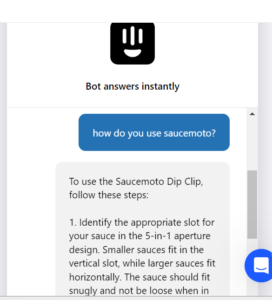
Image:

  • This chatbot could be integrated and used to increase sales by promoting an interactive way that the company can engage with customers. Chatbots can give more precise answers to customers than a FAQ page like the current website utilizes. 

Part 4: 

  • The chatbot was very easy to use. I had to take the link for the website of Saucemoto and put it into the link section of Intercom for the chatbot to analyze. Seeing as the chatbot was so easy to use, I am surprised that the current website for this product does not utilize a chatbot. I think using a chatbot could have a positive impact on sales and customer engagement. It would give customers a way to get quick answers to the questions they may have without having to search the whole website for it.